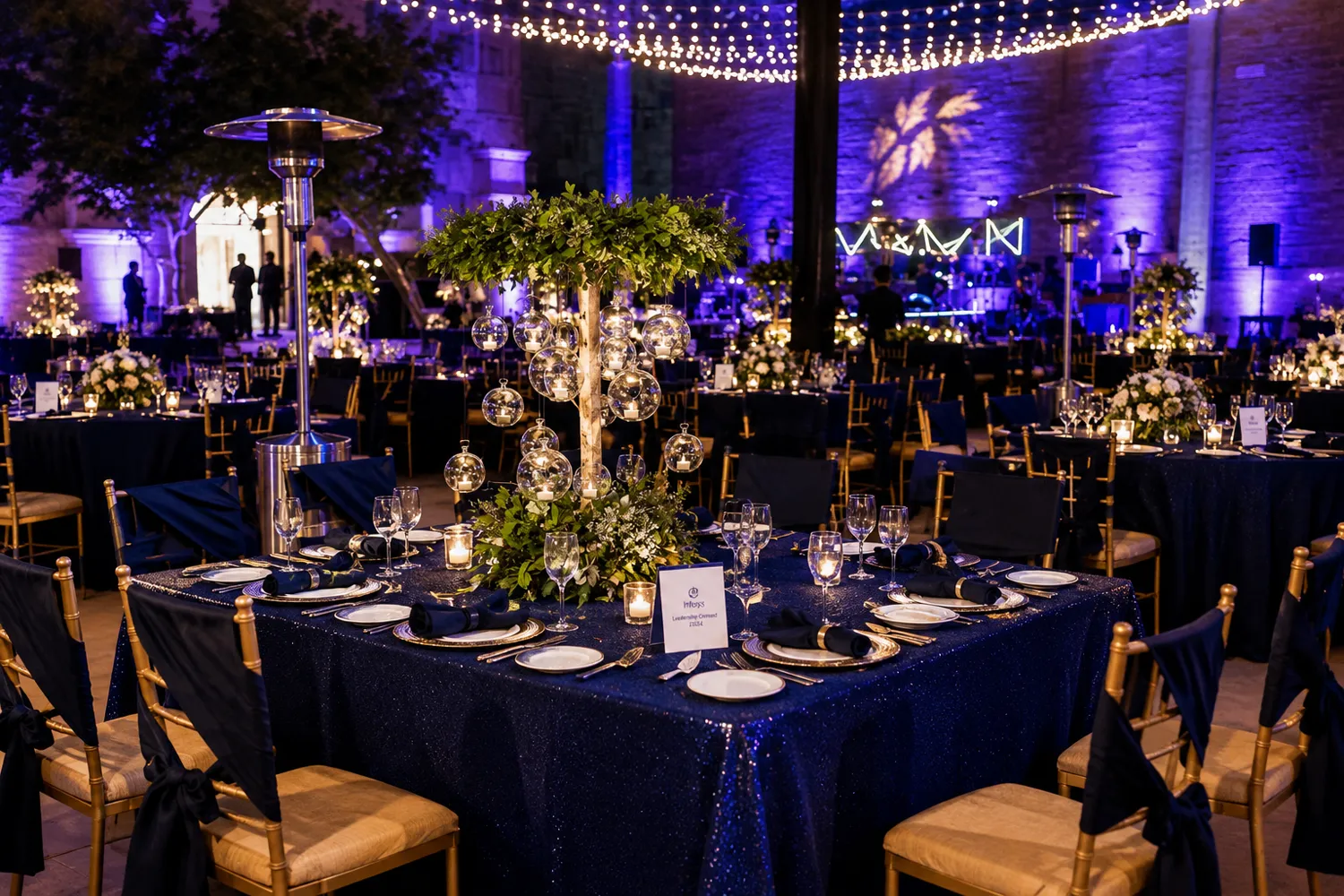
A corporate event in Mumbai can cost from roughly ₹1 lakh for a small meeting to ₹30 lakh or more for a large annual day, conference, product launch or family day. The biggest variables are guest count, venue and F&B, production, stage design, entertainment, logistics and the level of event management required.
A Complete 2026 Budget Guide
How Much Does a Corporate Event Cost in Mumbai? A Complete 2026 Budget Guide
The short answer: a corporate event in Mumbai can cost anywhere from about ₹1 lakh for a focused meeting or workshop to ₹30 lakh or more for a large annual day, conference, awards night, product launch or family day. Premium venues, complex technical production, celebrity entertainment, custom-built sets or multi-day formats can push the budget significantly higher.
The more useful answer is that there is no single “per-person” price for a corporate event. Food may be priced per guest, but an LED wall, stage, sound system, show caller, registration desk, photographer or rehearsal schedule costs roughly the same whether 250 or 300 people attend. That is why two events with the same guest count can have completely different budgets.
If you are putting together an internal budget before speaking to an event agency, this guide gives you a practical way to think about the major cost buckets, the decisions that move the number, and where it is worth spending more.
Corporate event costs in Mumbai: quick 2026 planning ranges
The figures below are indicative planning ranges, not quotations. They are useful for early-stage budgeting before venue availability, menu, production specifications and the event brief are locked.
| Event format | Typical guests | Duration | Indicative all-in range |
| Leadership meeting / board meeting | 20-50 | Half day | ₹80,000-₹3 lakh |
| Training / workshop | 50-120 | Half or full day | ₹1.5-₹6 lakh |
| Conference / town hall | 200-400 | Full day | ₹10-₹25 lakh |
| Product launch | 150-350 | Half day / evening | ₹8-₹30 lakh |
| Awards night / annual day | 300-600 | Evening | ₹15-₹50 lakh |
| Family day / large town hall | 500-1,200 | Full day | ₹25-₹1Cr+ |
Important: these ranges can move sharply. A conference in a functional business hotel and the same conference in a luxury hotel with a custom stage, high-resolution LED, live entertainment and premium hospitality are not comparable products.
1. Venue and food & beverage
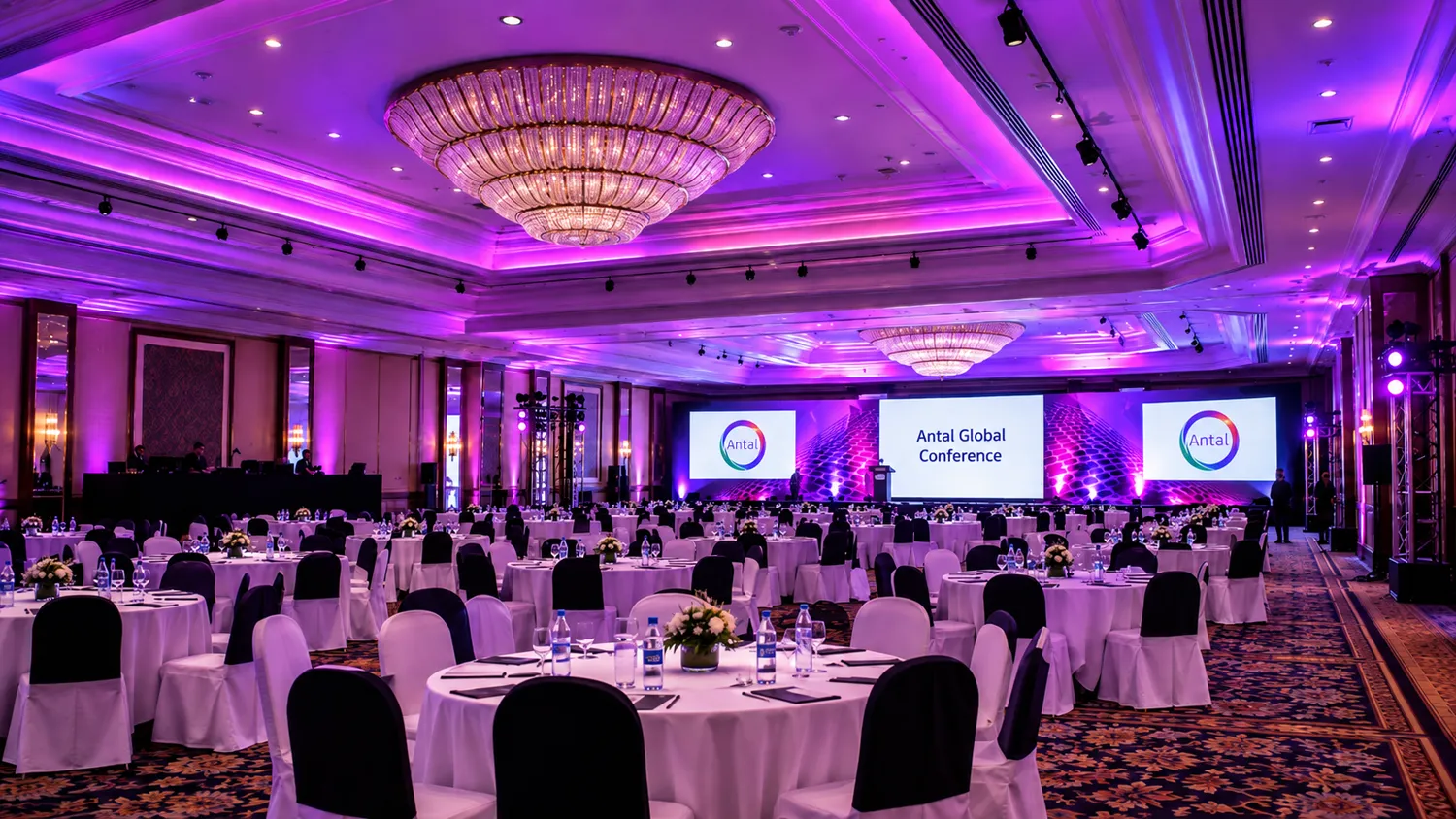
For many corporate events, venue and F&B are the largest line item. Mumbai has an unusually wide range of options: conference rooms, banquet halls, business hotels, five-star hotels, auditoriums, clubs, convention centres, restaurants, rooftops and large exhibition venues.
Public Mumbai listings in 2026 show why the range is so broad. Basic and mid-market venues can start below ₹1,000 per plate, while premium hotel and convention inventory is commonly listed in the ₹3,000-₹4,500+ per-plate range. A single venue marketplace currently lists examples ranging from around ₹500-₹1,500 per plate for many smaller venues to approximately ₹3,800 at ITC Maratha and ₹4,500 at JW Marriott Sahar and Jio World Convention Centre. The rate you actually receive will depend on date, menu, minimum guarantee, taxes, package inclusions and negotiation.
- Guest count and minimum guaranteed attendance
- Lunch, dinner, high tea, snacks and beverage requirements
- Alcohol licensing and beverage packages, where applicable
- Weekday versus weekend demand
- Ballroom rental, minimum F&B commitment or package structure
- Breakout rooms, green rooms, rehearsal access and setup time
- Loading access, parking, valet and vendor permissions
For a small meeting, there are also venues that charge a room rental rather than a per-plate minimum. For example, Bombay Chamber publicly lists conference spaces in Mumbai from around ₹8,000-₹37,000 depending on room size, duration and member status, before GST. This is one reason a 30-person workshop can be budgeted very differently from a 300-person annual day.
2. Technical production: sound, LED, lights and show systems
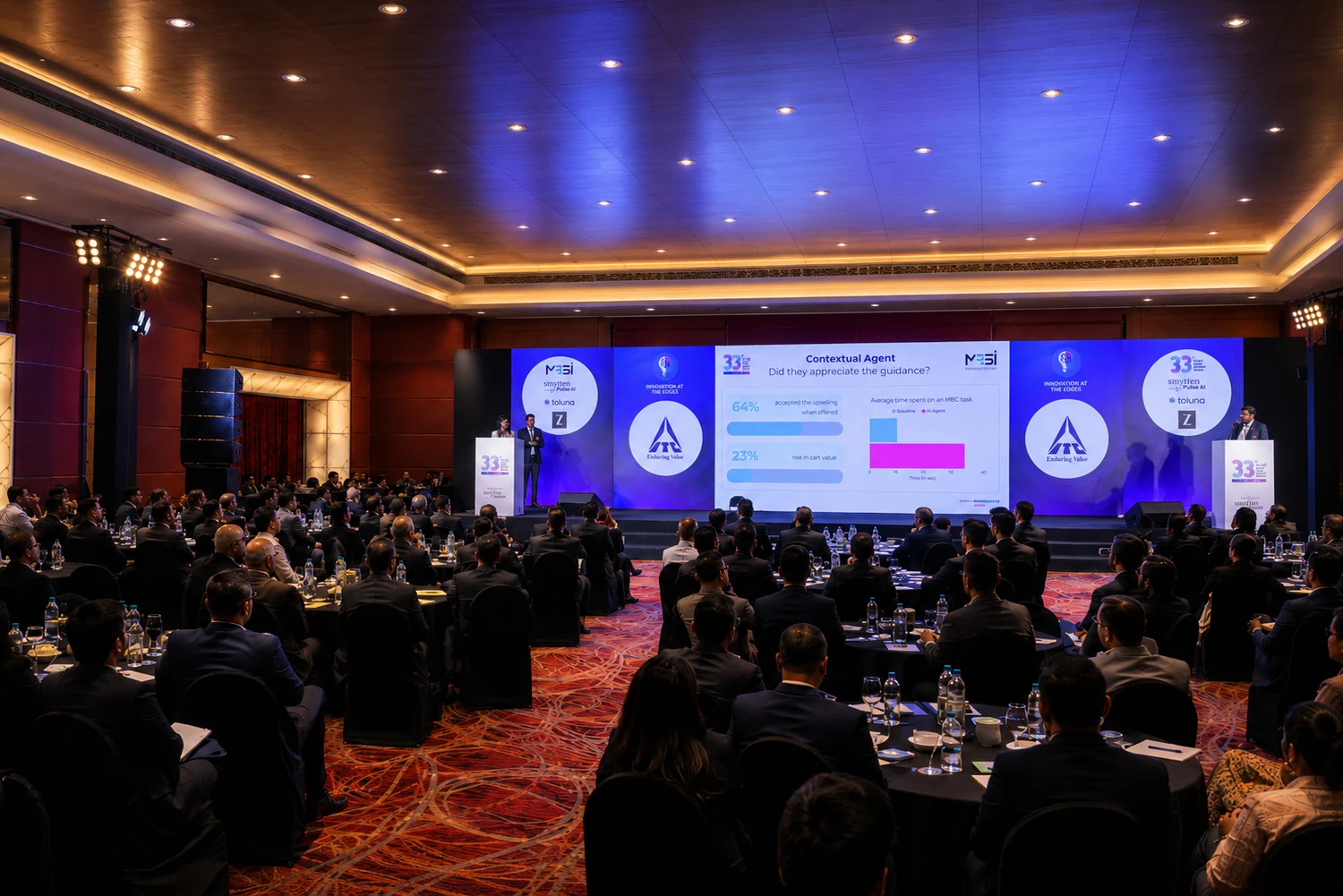
Production is the part of the budget most often underestimated by first-time planners. A venue may provide a basic projector and house sound, but a corporate event with presentations, films, awards, performances or branded content usually needs a more robust technical setup.
- LED walls or projection systems
- PA system, microphones, monitors and audio console
- Stage lighting, moving heads, washes and effect lighting
- Playback laptops, switchers, presentation clickers and confidence monitors
- Camera feeds, IMAG and live streaming
- Power distribution, cabling and backup
- Technical operators, rehearsals and show calling
LED pricing illustrates why a simple “screen cost” can be misleading. Supplier guides typically quote the panels by square foot, but processors, structures, cabling, technicians, transport and setup are additional. Pixel pitch and screen size also matter. A clean 16 x 9 ft presentation wall and a wide immersive stage backdrop are very different production requirements even though both are casually described as “an LED screen.”
For a corporate event, reliability matters more than chasing the cheapest equipment rate. A failed microphone during a leadership address or a playback issue during an awards film is far more visible than a modest saving on the technical budget.
3. Stage design, fabrication, branding and decor
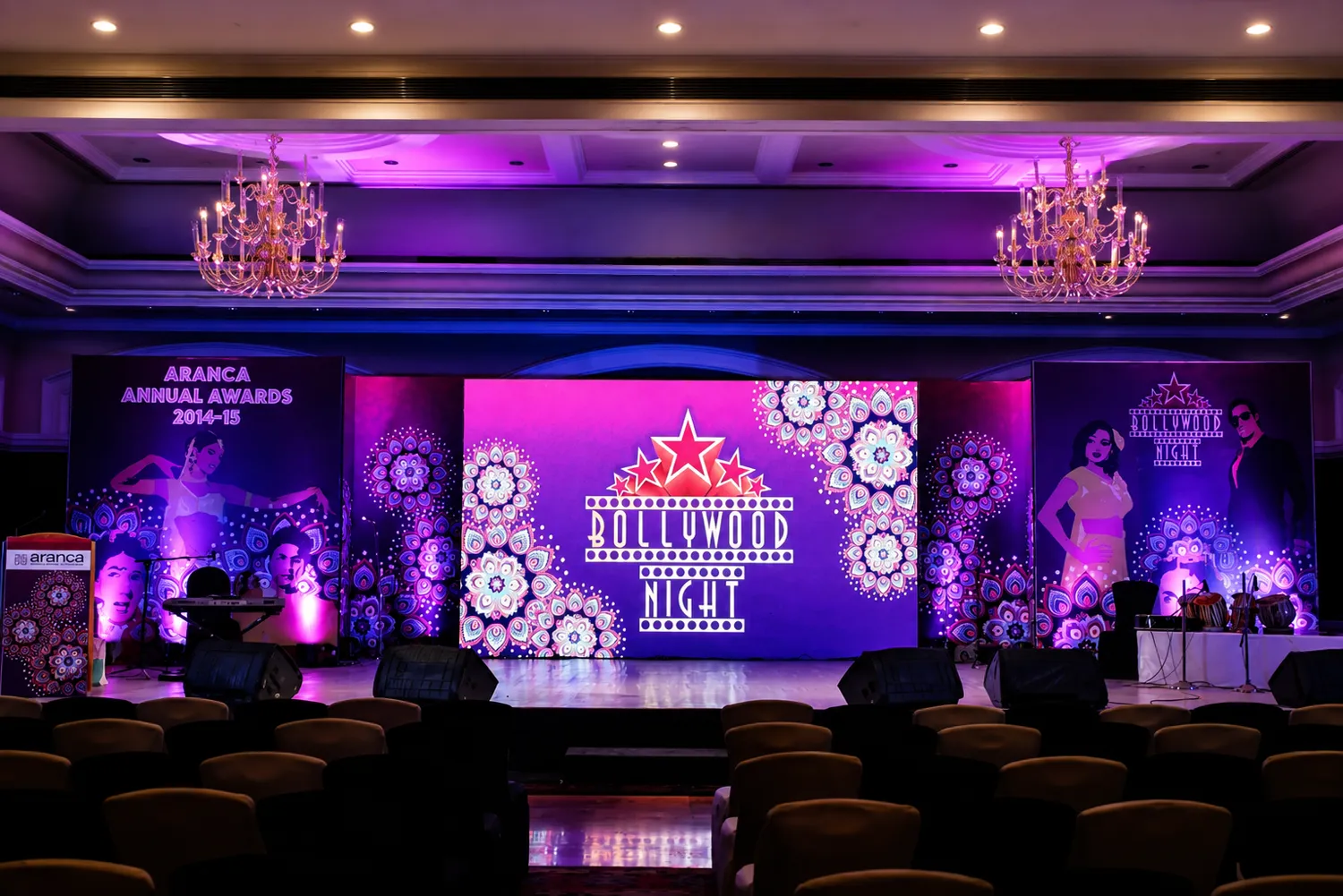
The stage is usually the visual centre of a corporate event. Costs can range from a simple carpeted riser with a printed backdrop to a fully fabricated environment using LED, scenic panels, illuminated logos, acrylic cut-outs, branded arches, props, custom furniture and programmed lighting.
A useful way to think about this budget is to separate three layers:
- Functional: stage, lectern, basic backdrop, simple branding and directional signage.
- Designed: custom stage composition, branded scenic elements, entry treatment, photo opportunity and coordinated lighting.
- Immersive: large-format LED, engineered scenic structures, moving elements, projection, multiple audience zones or a fully themed environment.
The budget also changes depending on how much can be reused. A digital screen-based design is easier to update than a fully fabricated physical set. Conversely, a strong physical identity can make an awards night or annual day feel far more premium than relying on one LED wall for everything.
4. Entertainment and employee engagement
Entertainment is one of the widest budget variables. A DJ, emcee, in-house employee performance, professional dance act, band, comedian or celebrity artist all sit in completely different cost brackets.
For HR-led events, engagement can matter more than “entertainment” in the conventional sense. Games, team challenges, interactive installations, recognition formats, live polling, employee films, photo experiences and collaborative activities can all be designed around the business objective rather than added as filler between speeches.
This is also where concept development matters. A strong internal theme can connect stage content, employee participation, films, performances and leadership messaging into one experience. Pegasus used this approach for Aranca with the “We Are Aranca” platform, built around camaraderie and the idea of the organisation operating as one unit.
5. Registration, event technology and attendee experience
Registration is relatively inexpensive until complexity is added. A simple guest list and desk may only need staff, printouts and badges. A larger conference can require QR check-in, badge printing, RSVP tracking, segmented access, live agenda updates, lead retrieval or attendee analytics.
- Pre-event RSVP and reminder communication
- QR codes and digital check-in
- On-site badge printing
- Event apps or microsites
- Live polling and Q&A
- Social media walls or content feeds
- Hybrid or livestream infrastructure
For a 100-person internal meeting, much of this may be unnecessary. For a 700-person seminar with sponsors, exhibitors, sessions and multiple stakeholder groups, it becomes part of the operating system of the event.
6. Content, films, photography and video
Corporate events increasingly need content before, during and after the event. The event budget may therefore include more than a photographer and videographer.
- Opening films and brand AVs
- Leadership films or interviews
- Awards nomination packages
- Motion graphics and screen content
- Presentation design and speaker support
- Event photography and highlight films
- Same-day edits and social content
When content is central to the reveal, the creative and technical teams need to work together early. A film designed for a standard 16:9 screen is not automatically suitable for an anamorphic display, projection-mapped surface or unusual stage canvas.
7. Logistics, manpower, transport and backstage operations
A polished event hides a large amount of operational work. Crew movement, vendor loading, rehearsals, artist hospitality, transport, storage, security, permissions and backstage coordination rarely show up in the event photographs, but they are what keep the event running.
- Event managers and floor coordinators
- Hostesses, ushers and registration staff
- Security and crowd management
- Artist and speaker management
- Guest transfers and transport desks
- Vendor transport, loading and overnight holding
- Backstage consumables, printing and last-mile purchases
This is one of the clearest differences between buying individual vendors and engaging an event management company. You are not only paying for objects. You are paying for coordination, sequencing, accountability and someone owning what happens when one part of the plan changes.
8. Event management and agency fees
There is no universal agency-fee model. Depending on the brief, an event company may charge a fixed professional fee, a percentage of managed expenditure, a project-management fee, production mark-ups, or a combination of these structures. The right comparison is not simply “which agency has the lowest fee?” but what scope and risk each quote actually includes.
A turnkey brief may cover concept, venue coordination, budgeting, vendor procurement, production, content, rehearsals, permissions, logistics, show management, guest experience and post-event closure. A production-only quote may cover much less. Comparing the final totals without comparing the scopes is one of the easiest ways to make a bad procurement decision.
Why “cost per person” is a poor way to budget a corporate event
Per-person budgeting works reasonably well for food. It works badly for most of the rest of an event.
Imagine a 300-person annual day with a 24-foot stage, LED wall, sound system, lighting rig, two films, an emcee, an awards segment and a six-hour show. If the guest list drops from 300 to 260, your catering bill may reduce. The stage does not become 13% smaller. The LED wall does not shrink. The audio console, technicians, show caller, emcee and rehearsal are still required.
That is why the event should be budgeted in two parts:
- Variable costs: food, beverages, guest transport, gifts, badges and other items that scale with attendance.
- Fixed or semi-fixed costs: venue rental, stage, AV, entertainment, content, event crew, creative development and show management.
Once you separate those two categories, the budget becomes much easier to control.
Example: budgeting a 300-person corporate annual day in Mumbai
A mid-to-premium 300-person annual day could look something like the following. This is a budgeting example only; it is not a Pegasus quotation.
| Cost bucket | Indicative range | What drives it |
| Venue + F&B | ₹20-₹30 lakh | Driven mainly by venue tier and menu |
| Stage + fabrication + branding | ₹1-₹3 lakh | Simple to heavily designed |
| LED + sound + lighting + technical crew | ₹3-12₹ lakh | Depends on screen size and show complexity |
| Entertainment / emcee / engagement | ₹50,000-₹3 lakh+ | Celebrity talent can be far higher |
| Photography + video + event content | ₹50,000-₹1.5 lakh | More for multiple films / same-day content |
| Registration + staffing + logistics | ₹40,000-₹1.75 lakh | Varies with transport and guest handling |
| Creative, planning and event management | Scope-based | Depends on responsibility and complexity |
| Licenses | ₹1.25-₹2.25 lakh | As per curated entertainment |
| Contingency | 5-10% | Useful for late changes and additions |
A lean version can come in below this; a five-star venue, large custom stage, heavy entertainment programme or sophisticated content package can take the same event well above it. The point of the exercise is not to predict an exact total. It is to show where the money actually goes.
The five decisions that change your corporate event budget the most
1. Venue tier: Moving from a functional banquet or business hotel to a premium five-star property can change both the per-plate cost and the commercial terms around ballroom access, minimum guarantees, vendor charges and setup.
2. Guest count: Food and beverage, transport, gifts, badges and some staffing scale directly with attendance. Large changes in headcount matter even when the production cost stays similar.
3. Stage and technical ambition: A presentation-led conference needs a different production package from an awards show with performances, multiple playback cues and dramatic lighting.
4. Entertainment: Employee-led programming can be extremely effective and cost-efficient. Professional acts, headline artists and celebrities can become one of the largest line items in the event.
5. Setup and rehearsal time: A complex event may require overnight installation, early venue access, multiple rehearsals or an additional venue day. Those hours affect labour, technical crew and venue costs.
How to reduce the budget without making the event feel cheap
- Spend on the guest-facing moments that matter most. A strong stage, clear sound and disciplined content usually create more impact than decorating every square foot of the venue.
- Use venue infrastructure intelligently. Existing rigging points, house truss, built-in screens or furniture can reduce fabrication and logistics.
- Choose one strong visual idea. Repeating one coherent design language often feels more premium than adding unrelated decor elements.
- Lock the brief earlier. Rush fabrication, last-minute content and late artist bookings are expensive.
- Design for digital flexibility. LED content can change between sessions, awards categories and brand moments without rebuilding the physical set.
- Separate “must-have” and “nice-to-have” items in the first estimate. This makes it much easier to value-engineer without damaging the core experience.
Where you should be careful about cutting costs
There are areas where aggressive cost-cutting can create disproportionate risk:
- Audio quality for leadership speeches, awards and live entertainment
- Power backup and technical redundancy
- Rehearsal time for complex shows
- Rigging, structural safety and certified technical equipment
- Guest flow, registration and transport for large audiences
- Experienced show management when multiple vendors and cues are involved
Corporate audiences are usually forgiving about a modest floral arrangement. They are much less forgiving when they cannot hear the CEO, the awards film does not play, buses arrive late or registration becomes a queue.
What should a corporate event quotation include?
Before comparing two event budgets, make sure they are actually quoting the same event. A useful estimate should identify the assumptions behind the number.
- Guest count and date assumptions
- Venue and F&B inclusions
- Stage dimensions and fabrication specifications
- LED size, pixel pitch and technical inclusions
- Sound and lighting specification
- Entertainment and artist assumptions
- Creative, content and design scope
- Event staff and manpower
- Transport and logistics
- Setup, rehearsal and dismantling timings
- Taxes, permissions and exclusions
- Contingency or provisional items
This makes procurement much more transparent. A lower quote may simply have omitted items that will appear later as additions.
What about GST?
GST treatment depends on the exact supply and billing structure, but event organisation and assistance services are generally taxed at 18% under India’s GST framework. Venue, catering and bundled hospitality arrangements can have their own classification and commercial treatment. For budgeting, always confirm whether quoted figures are inclusive or exclusive of GST rather than assuming.
How early should you start budgeting?
For a straightforward meeting, a few weeks may be enough. For a large annual day, conference, product launch or awards night, earlier planning gives you far more control over venue choice, content, vendor availability and cost.
A practical starting point is:
- 4-6 weeks: smaller meetings, workshops and relatively simple formats
- 6-10 weeks: annual days, conferences and employee events with standard production
- 10-16+ weeks: large-scale events, custom fabrication, significant content creation, artist-heavy shows or multi-day programmes
The closer you get to the event, the more your choices are driven by what is still available rather than what is ideal.
What Pegasus Events – TTM brings to the budget conversation
Pegasus Events – TTM has been planning and executing corporate events since 2005, across conferences, employee events, product launches, awards programmes, exhibitions and large-format brand experiences. Over that time, one lesson has stayed consistent: clients are not simply buying vendors. They are buying coordination and risk absorption.
A good event budget therefore needs to answer two questions at the same time: “What will this cost?” and “What has to happen for this to work?” The first creates the estimate. The second creates the event plan.
That distinction matters when there are multiple stakeholders, hard venue deadlines, live content, senior leadership, sponsors, exhibitors, employee performances or hundreds of guests moving through the same experience.
Frequently asked questions
How much does a 100-person corporate event cost in Mumbai?
A practical early-stage budget is roughly ₹5-₹8 lakh for a 100-person meeting, workshop or simple corporate gathering. A premium hotel, elaborate stage, heavy AV, entertainment or a full-day programme can take it higher.
How much does a 300-person annual day cost in Mumbai?
A 300-person annual day can reasonably fall in the ₹8-₹20 lakh range, with the total driven by venue, menu, stage design, LED and sound, entertainment, content and logistics. Premium formats can exceed this.
How much does a 500-person corporate event cost?
For a 500-person annual day, awards night, town hall or family event, ₹15-₹40 lakh is a useful initial planning range. Venue tier, entertainment and production ambition can move the number significantly.
What is the biggest cost in a corporate event?
For many Mumbai events, venue and food & beverage are the largest single cost. For production-heavy events, stage, LED, sound, lighting and entertainment can equal or exceed the hospitality budget.
Is a corporate event charged per person?
Only some costs are truly per person. Catering, beverages, gifts and some transport scale with attendance. Stage, AV, entertainment, content and show management are largely fixed or semi-fixed.
How do event management companies charge?
Agencies may use a fixed professional fee, percentage-based management fee, production mark-up, project fee or a combination. Compare the exact scope, exclusions and responsibility in each quotation rather than only the headline fee.
Is GST extra on corporate event budgets?
Often, yes. Event organisation and assistance services generally attract 18% GST in India, but the tax treatment depends on the supply and billing structure. Always confirm whether each quotation is inclusive or exclusive of tax.
How far in advance should I book a corporate event venue in Mumbai?
For larger annual days, conferences, awards nights and launches, starting 6-12 weeks ahead gives you far more venue and vendor choice. Complex or high-profile formats should start even earlier.
Planning a corporate event in Mumbai?
If you already have a date, approximate guest count and objective, Pegasus Events – TTM can help turn that into a practical event scope and working budget. The first step is not choosing decor or entertainment. It is deciding what the event needs to achieve, what the audience needs to experience, and which costs are essential to delivering that reliably.
Talk to Pegasus Events – TTM about your next corporate event.
Pricing methodology and editorial source notes
Rates in this article are indicative 2026 planning ranges assembled from current public Mumbai venue listings, meeting-room tariffs and event-industry pricing references, then structured into typical corporate-event cost buckets. They are not vendor quotations. Final pricing depends on date, venue, taxes, negotiated commercial terms, technical specification, guest count, entertainment, logistics and scope.
- VenueLook – Corporate Event Venues in Mumbai (updated September 2026)
- CorpVenue – Corporate Venues in Mumbai
- Bombay Chamber – Conference and Meeting Rooms Price Table
- GST Council / CBIC – service tax rate references for event organisation and assistance services
- EventSphereX – LED Wall Rental Rates in India 2026